

Custom Homes in Helotes — Where San Antonio Ends and the Hill Country Begins
Sixteen miles northwest of downtown San Antonio. The Balcones Fault runs through here, lifting the terrain from the Coastal Plain into the limestone hills. On one side, the city. On the other, the Hill Country. Helotes sits exactly on the line.
The Hill Country Starts Here — Literally
The Balcones Escarpment — the geological fault line that separates the Texas Coastal Plain from the Edwards Plateau — runs directly through the Helotes area. To the southeast, the terrain is the flat, clay-soiled landscape of suburban San Antonio. To the northwest, the ground lifts into the limestone hills, live oak woodland, and rolling terrain that define the Hill Country. The transition is visible: within a few miles of Helotes’ city center, the landscape changes from subdivisions and strip retail to rugged hillsides, creek crossings, and long-distance views.
This geological edge is what gives the Helotes area its particular appeal for custom home buyers. Properties in and around Helotes can range from one-acre city lots with municipal services to five-, ten-, and twenty-acre parcels in unincorporated Bexar County where the Hill Country terrain begins in earnest. The acreage along Scenic Loop Road, Government Canyon, and the corridors west toward Bandera offers the same elevation changes, rock substrate, and view opportunities that Turner encounters throughout the deeper Hill Country — but with a commute to downtown San Antonio measured in minutes, not hours.
A Small City with Deep Roots and a Short Commute
Helotes was settled in the 1850s by German and Spanish immigrants, and the name derives from the Spanish word elotes — corn on the cob — reflecting the agricultural economy that defined the area for over a century. The community remained rural until the late twentieth century, when San Antonio’s suburban expansion reached the Helotes valley. The city incorporated in 1981 to manage growth on its own terms, and today approximately 9,000 residents live within the city limits.
Old Town Helotes, the renovated downtown completed in 2011, anchors the community’s cultural identity. John T. Floore Country Store, a legendary dance hall operating since 1946, has hosted performers from Willie Nelson to the Texas Tornados. The annual Cornyval festival draws 30,000 visitors to the small city each spring. Government Canyon State Natural Area, a 12,000-acre preserve with over 40 miles of trails and some of the best birdwatching in the San Antonio region, borders the community to the west.
Northside ISD serves Helotes, with students attending Sandra Day O’Connor High School — one of the district’s flagship campuses. The Loop 1604/Bandera Road interchange provides quick access to the medical center corridor, USAA, UTSA, and the broader northwest San Antonio employment base. The commute from most Helotes neighborhoods to these destinations runs 15 to 25 minutes.
Two Options on Either Side of the Line
The Helotes area offers custom home lots in two distinct regulatory environments. The building conditions and the permit process differ depending on which side of the city boundary the lot sits on. Paradise builds in both.
Properties within Helotes’ city limits are governed by municipal permitting, building codes, and city inspection schedules. Municipal water and sewer are generally available. Lot sizes within the city tend to range from half an acre to two acres, with some larger parcels available in the less-developed sections. The city regulates setbacks, building height, and impervious cover. Paradise manages this permitting process as part of its turnkey service — it is the same framework Turner navigates in Boerne, Fair Oaks Ranch, and New Braunfels.
Properties in unincorporated Bexar County or adjacent Bandera County, just beyond Helotes’ city limits, follow the standard Hill Country model: larger acreage lots (five to twenty or more acres), HOA-governed subdivisions or unrestricted tracts, septic systems, and in some cases well water. The terrain on these lots is typically more rugged — steeper grades, more exposed limestone, and the oak-covered hillsides that define the deeper Hill Country. Building here requires site-specific foundation engineering, drainage planning, and Turner’s expertise in reading the terrain.
The Terrain Changes — The Experience Doesn't
Whether the lot is a one-acre city parcel with municipal services or a fifteen-acre tract in the hills above Government Canyon, Turner evaluates it the same way: where the sun hits, where the wind comes from, where the rock is close enough to matter, and where the home should sit to take advantage of everything the property offers.
The Helotes area is close to Paradise’s base near Bulverde — roughly 20 miles. Turner’s subcontractor network extends throughout this part of San Antonio’s northwest corridor, and the logistical advantages of proximity apply here just as they do in Bulverde. Daily site visits, fast turnaround on questions, and direct coordination with trades are standard.
The Balcones Fault zone that defines the Helotes terrain creates a specific building condition worth noting: the rock depth and type can change dramatically within a short distance. A lot that looks flat and manageable may sit on limestone close to the surface, while a neighboring property has several feet of soil before reaching rock. Turner’s experience in reading these conditions during the lot walk prevents budget surprises later in the project.
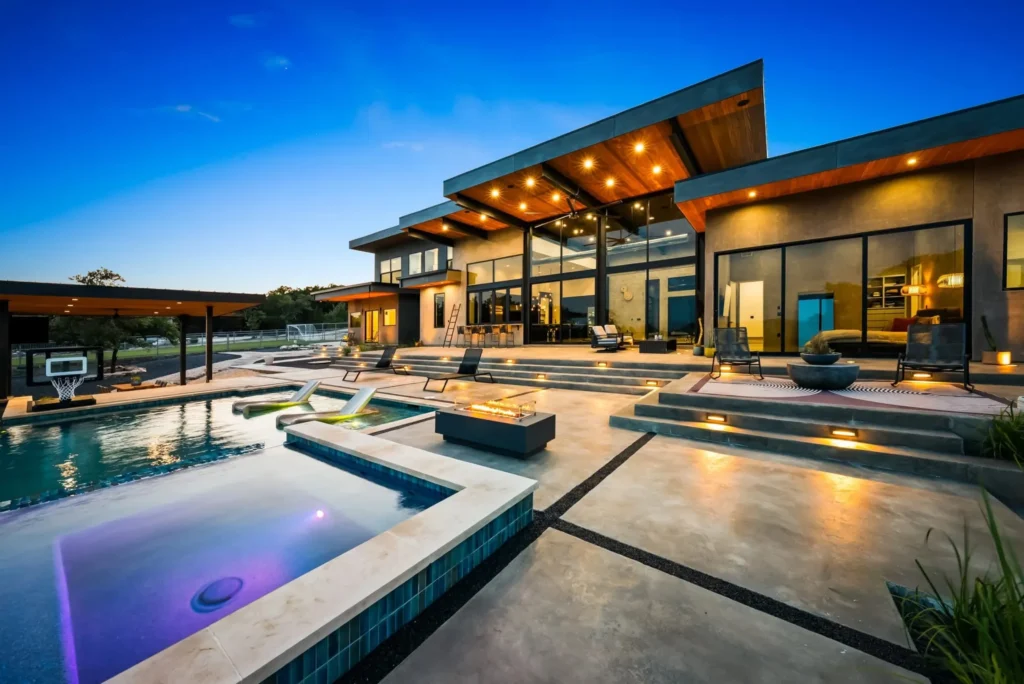
We wanted Hill Country terrain without leaving San Antonio behind. Our lot is five minutes past the city limit, on a hillside with views west toward Bandera. Turner walked it and told us within ten minutes where the house should sit and why. He was right about every detail — the breeze, the sunset, the privacy from the road.
Your Helotes Home — Hill Country Quality, City Convenience
The Hill Country starts right here, and so does the conversation. Turner can walk your lot — whether it’s in the city or in the county — and show you what the terrain makes possible.