

Custom Homes in Blanco — Built for the Land, Built for You
Forty-five miles from San Antonio. Forty-five miles from Austin. A world apart from both. Paradise Custom Homes builds on acreage throughout Blanco County, from the river bottoms to the highest ridgelines.
A River Town with Deep Roots
Blanco is a cattle and ranching town that has never tried to be anything else. Founded in 1853 by pioneer stockmen and former Texas Rangers, it grew up along the banks of the river that shares its name — “blanco” for the white limestone cliffs that line the water. The town’s population sits around 1,700. The historic square, anchored by the restored 1885 county courthouse, still functions as the center of daily life.
The Blanco River runs along the town’s southern edge, feeding Blanco State Park and providing the swimming, fishing, and quiet riverside living that draws people here. The river is the reason the town exists, and it remains the reason most people stay.
Beyond the square, Blanco has developed a craft economy that reflects the character of the Hill Country — Real Ale Brewing Company has been producing beer here since the 1990s, and distilleries like Milam & Greene have followed. Lavender farms in the surrounding county have earned Blanco the title of Lavender Capital of Texas, and Scenic Texas has designated it a Certified Scenic City. None of this happened because of aggressive development. It happened because people who care about the place invested in it.
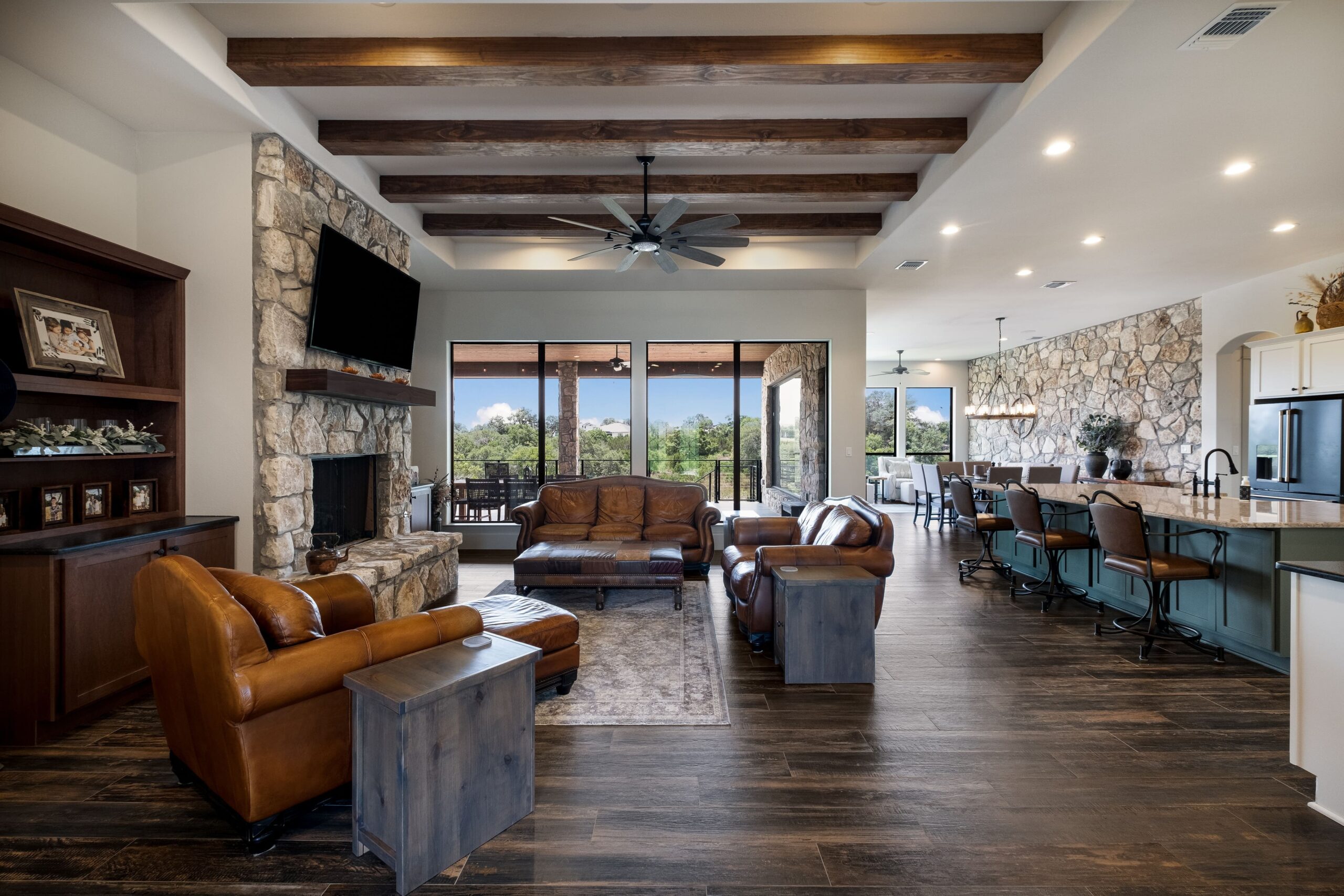
For someone considering building a custom home, Blanco offers something specific: a genuine small town with the services and culture to support daily life, surrounded by acreage that ranges from river-bottom parcels to high-elevation ridgelines with long-distance Hill Country views.
From River Bottoms to Ridgelines — Blanco County's Terrain
Blanco County’s topography is one of its strongest assets for custom home building. The terrain is not uniform — it shifts meaningfully across the county, and those variations determine what kind of home belongs on a given piece of land.
Along the Blanco River and its tributaries, the land is lower, flatter, and defined by mature hardwoods — pecan, cypress, and live oak. These parcels tend to have deeper soils, more established vegetation, and a sense of shelter. They suit homes designed around shade, privacy, and proximity to water. The buildable areas often sit above the floodplain on gentle rises, where the tree canopy frames the property without crowding it.
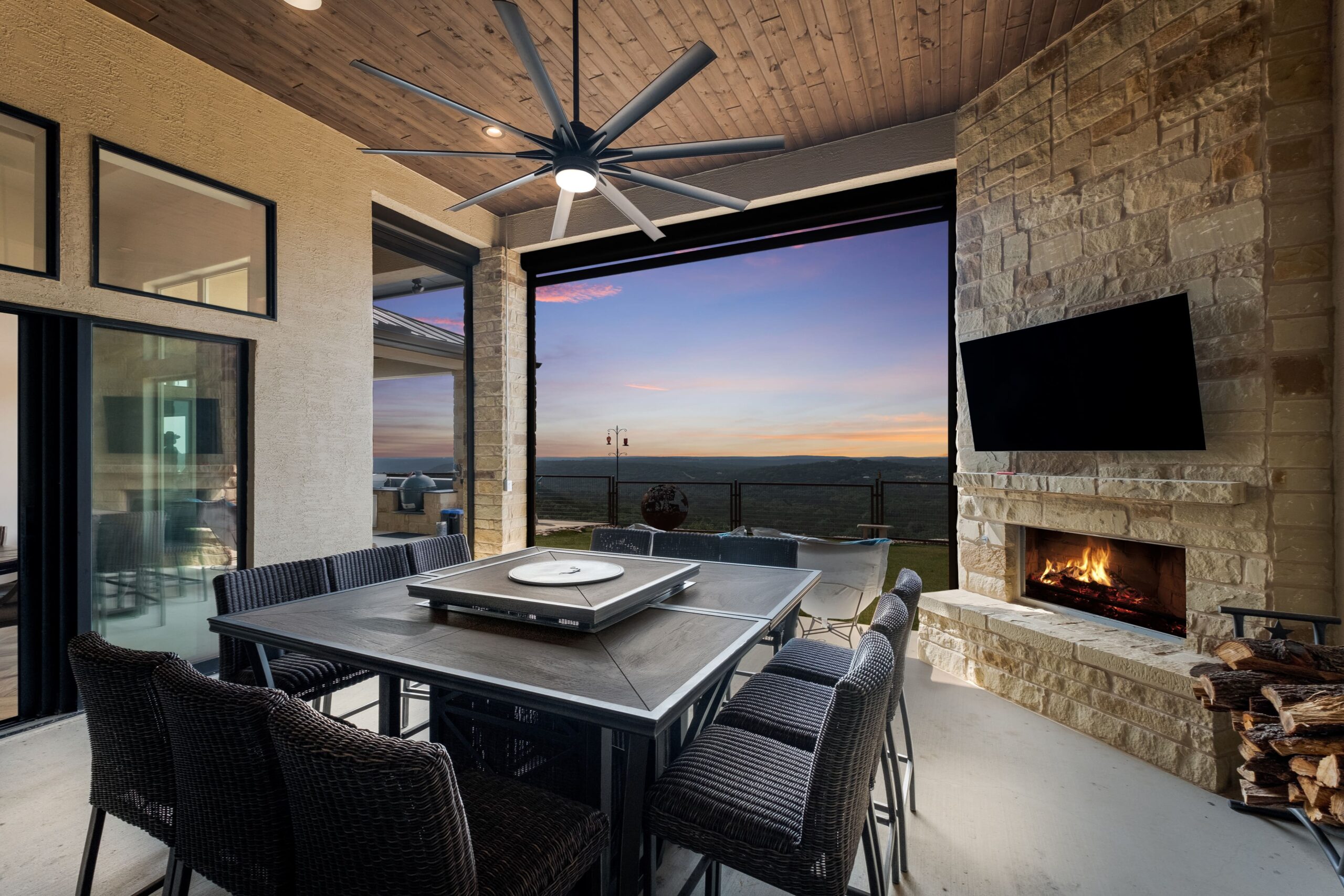
Move away from the river corridors and the terrain begins to climb. The central and western portions of the county feature rolling limestone hills covered in live oak and juniper, with elevation changes that create natural building sites with views in multiple directions. At the higher elevations — some lots in Blanco County reach 1,700 to 1,800 feet — the terrain opens up to panoramic vistas that stretch for miles across the surrounding Hill Country. These are the lots where a carefully sited home can capture a sunset view from the back patio that reaches to the horizon.
The soil profile across Blanco County is predominantly limestone and caliche, which affects foundation design and excavation planning. Turner understands these conditions from years of building in the area — where rock will require blasting or special equipment, where the soil depth supports conventional foundations, and where the natural drainage patterns need to be accounted for in home placement.
"The terrain tells you where the house wants to be. You read the lot — the sun, the wind, the trees, the views — and the right spot becomes clear."
Building on Acreage in Blanco County
Subdivisions and Lot Types:
Most custom home building in Blanco County takes place in HOA-governed acreage subdivisions — communities created when developers purchase ranch land, install roads and electricity, and divide the property into individual lots. These lots typically range from one acre to ten or more, though larger unrestricted parcels of 20, 50, or 100+ acres are also available throughout the county for buyers who want more land and fewer restrictions.
Among the established communities in the Blanco area, Rockin J Ranch is one of the most recognized. It is a gated, family-oriented community with a golf course, community pool, and lots that range from smaller golf-course parcels to larger acreage tracts. The Ranches of Brushy Top offers five-acre-and-larger homesites surrounded by rolling terrain and native wildlife, with an 80-acre nature preserve and stocked lakes within the community. Majestic Hills Ranch, a certified Dark Sky community near downtown Blanco, features lots at elevations exceeding 1,700 feet with sweeping valley views, a spring-fed swimming hole, and equestrian facilities. The Divide, Cielo Springs, the Preserve at Walnut Springs, and Red Oak Mountain are among the other acreage subdivisions in the county, each with their own character, lot sizes, and architectural requirements.
Buyers looking for property along the 290 Wine Trail corridor between Blanco, Johnson City, and Fredericksburg will find a mix of smaller ranch communities and larger unrestricted parcels. This corridor has seen appreciation in land values over the past decade, driven in part by the wine and agritourism economy that has grown up along Highway 290.
Infrastructure and Utilities:
Because most of Blanco County is unincorporated, homes built outside the Blanco city limits require septic systems rather than municipal sewer. This is standard throughout the Hill Country, and Paradise installs septic systems as part of its turnkey building process. Water sources vary by location and lot size — some communities have municipal or co-op water service, while larger lots (particularly those over five acres) may require a water well. All lots in established subdivisions have access to electricity. Paradise coordinates all utility connections as part of the build.
Internet connectivity is worth considering when selecting a lot. Fixed wireless and satellite options are available throughout the county, and some subdivisions have fiber or cable service. For remote professionals — an increasing share of the buyers building in this area — confirming broadband availability before purchasing a lot is a practical step that Paradise can help with.
Regulatory Environment:
Building in unincorporated Blanco County is governed by the HOA and its architectural committee rather than a municipal building department. This means the permitting process is typically straightforward and faster than building within a city jurisdiction. Each HOA has its own set of architectural standards — minimum square footage, approved exterior materials, roof pitch requirements, setbacks, and sometimes specific style guidelines. Paradise is familiar with the requirements across the subdivisions where the company builds and navigates the approval process as part of its standard scope of work.
For the small number of lots within the Blanco city limits, municipal permitting applies. Turner knows the local process and has the relationships that keep approvals on track.
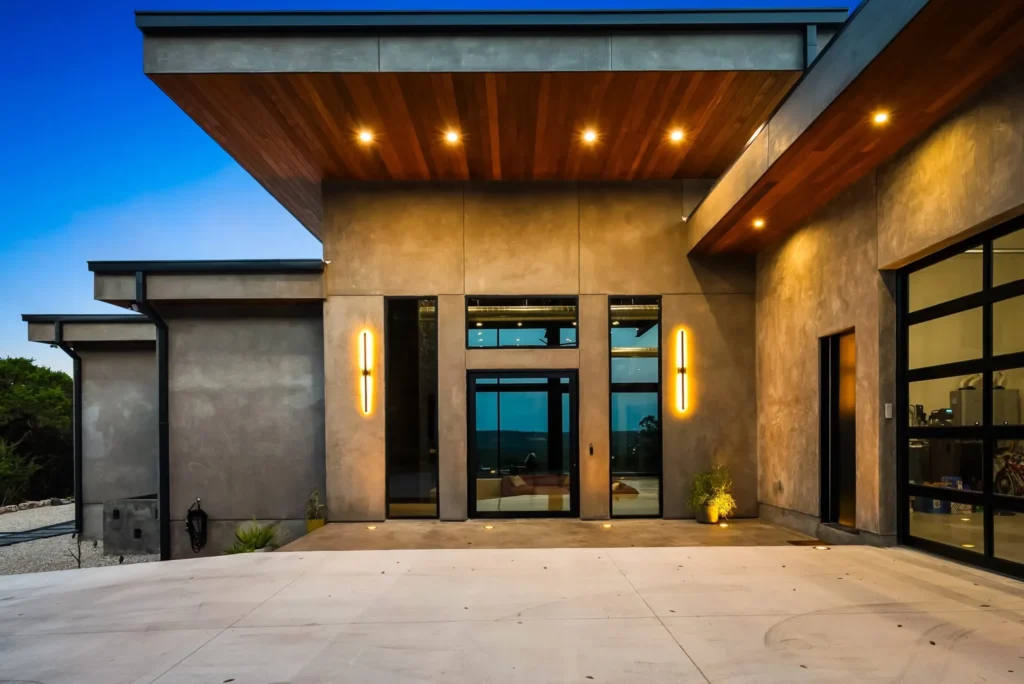
A Builder Who Reads the Land
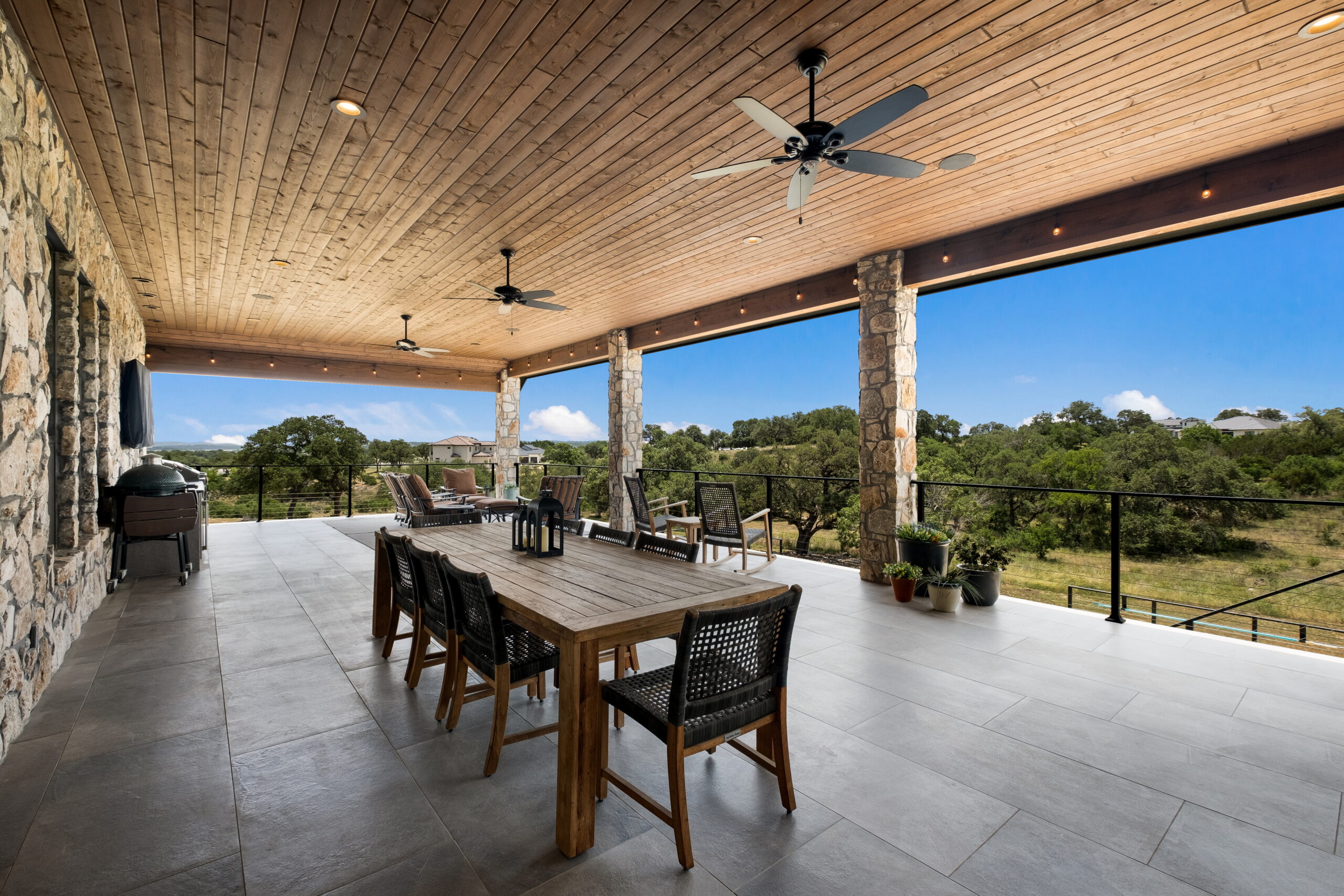
When Turner walks a lot in Blanco County, he is evaluating conditions that most buyers would not think to consider. The orientation of the home relative to the sun determines which rooms will be comfortable year-round — in Central Texas, the western setting sun is intense, and siting the home so that exposure falls on the front of the house rather than the back patio and living areas makes a measurable difference in comfort and energy costs. The prevailing southeasterly breezes are strongest from spring through fall, and positioning the rear patio and outdoor living spaces to capture those breezes turns a covered patio into a usable room for most of the year.
On Blanco County’s hillside lots, Turner evaluates which direction offers the strongest views and whether the home can be oriented to capture both the view and the optimal sun and wind exposure. Sometimes the best view and the best orientation align naturally. Sometimes they require a floor plan that accounts for both, and that is where experience matters — knowing how to design around the lot’s constraints rather than fighting them.
The limestone substrate that underlies most of Blanco County affects foundation planning. Turner knows where rock is close to the surface and where soil depth allows for conventional slab foundations. He knows which areas are prone to cedar elm root systems that can affect drainage, and where the natural slope of the land creates opportunities for walkout lower levels that add living space without adding the cost of excavation.
This is the kind of knowledge that accumulates over decades and hundreds of projects. It is the difference between a home that sits on its lot and a home that belongs there.
Blanco in the Context of the Hill Country
Blanco sits at the geographic center of a cluster of Hill Country communities, each with its own character. Johnson City is 15 miles north along US 281 — deeper into the Hill Country, with larger acreage tracts, the Pedernales River, and the LBJ National Historical Park. Wimberley is roughly 20 miles to the southeast, where the Blanco River continues through a distinctive valley known for its artist community and cultural life. Fredericksburg lies about 40 miles to the northwest along the Wine Trail corridor, and Dripping Springs is a similar distance to the northeast on the Austin side.
Paradise builds in all of these communities. For buyers who are drawn to the Blanco area but still exploring, Turner can walk you through the differences — terrain, lot availability, community character, and proximity to the amenities that matter to your daily life.
Johnson City
Deep Hill Country along the Pedernales River — large acreage and remote tranquility.
Wimberley
An artist community in the Blanco River valley with distinctive character.
Dripping Springs
Austin-side growth corridor with wine country and Hill Country terrain.
Spring Branch
Classic Hill Country heartland between Boerne and Canyon Lake.
We looked at land in three different Hill Country communities before settling on Blanco County. Turner walked every lot with us and helped us understand what each one offered — the views, the sun, the wind, the trees. By the time we chose our property, we already knew exactly where the house would sit and which direction the patio would face. That kind of knowledge made the entire process feel certain rather than overwhelming.
Ready to Build in Blanco?
Whether you already own land in Blanco County or are still exploring the area, Paradise Custom Homes can help. Call Turner directly or send a message — the conversation starts whenever you are ready.