

Custom Homes in Seguin — River Land East of San Antonio
Thirty-five miles east of San Antonio on Interstate 10. The Guadalupe River, pecan orchards, and agricultural acreage — the only community where Paradise builds east of the city, where the Hill Country gives way to the river bottomland.
The Oldest Town in Paradise's Service Area
Seguin was founded in 1838 by Texas Rangers, named for Colonel Juan Seguín, a Tejano hero of the Texas Revolution. That makes it the oldest community in Paradise’s 22-community service area — seven years older than New Braunfels, nine years older than Fredericksburg. The Guadalupe River runs through the southern side of the city, and the river’s bottomland created the agricultural economy that defined Seguin for most of its history. Pecan orchards line the river banks, and the city has carried the unofficial title “Pecan Capital of Texas” for decades — commemorated by the world’s largest pecan sculpture on the courthouse square.
Today Seguin is a growing city of more than 35,000 people, with a manufacturing base that includes Caterpillar, a regional medical center, Texas Lutheran University, and a downtown that has retained its historic architecture while adding new businesses. The I-10 corridor connects Seguin to San Antonio in 35 minutes and to Houston in under three hours, giving the city a dual-metro accessibility that most Hill Country communities lack.
Different Terrain — Same Standards
The terrain around Seguin is different from the Hill Country communities that make up the rest of Paradise’s service area. Where Boerne, Bulverde, and Canyon Lake sit on the Edwards Plateau — limestone substrate, live oak cover, rolling elevation — Seguin sits at the transition into the South Texas Plains. The soils are deeper, the terrain is flatter, and the landscape is defined by river-bottom agriculture, pecan groves, and the wide corridor of the Guadalupe River rather than by ridgelines and rock outcroppings.
For a custom home buyer, this means different building conditions. Foundations behave differently on deep clay soils than on shallow limestone. Drainage patterns follow the river bottomland rather than the hillside. The sun and wind relationships change when the terrain is flat and open rather than hilly and wooded. Turner evaluates these conditions with the same discipline he applies throughout the Hill Country — the methodology is identical, even when the geology is not.
What Seguin offers in exchange is acreage at a price point that the more established Hill Country communities cannot match, river access along one of the most significant waterways in Central Texas, and the proximity to San Antonio that makes a daily commute practical. For buyers who value space, quiet, and agricultural character over the limestone-and-live-oak landscape of the classic Hill Country, Seguin is worth considering.
City and County — Building East of San Antonio
Seguin is an incorporated city with municipal permitting, building codes, and an inspection process. Building within city limits follows the same general framework that Paradise navigates in New Braunfels, Boerne, and San Antonio — plan review, permits, scheduled inspections, and a certificate of occupancy. Municipal water and sewer are available within the city.
Outside the city, in unincorporated Guadalupe County, the standard acreage-subdivision model applies: HOA-governed communities, septic systems, and county-level permitting for wells and septic. The lots tend to be larger and less expensive per acre than comparable properties in the Hill Country counties to the north and west.
Seguin is approximately 35 miles from Paradise’s base near Bulverde — closer than Fredericksburg, Kerrville, Johnson City, or any of the Highland Lakes communities. The logistical advantages of that proximity are significant: Turner’s subcontractor network extends easily to Seguin, material deliveries are straightforward, and daily site visits are practical.
Reading the Bottomland
Turner has built in the Seguin area and understands how the bottomland terrain differs from the Hill Country lots that make up most of Paradise’s projects. The foundation engineering changes — expansive clay soils require different design approaches than the shallow limestone of the Edwards Plateau. The drainage planning changes — flat terrain near a river requires careful attention to water flow patterns and flood-zone considerations. The home orientation may prioritize shade from the pecan canopy rather than distant ridgeline views.
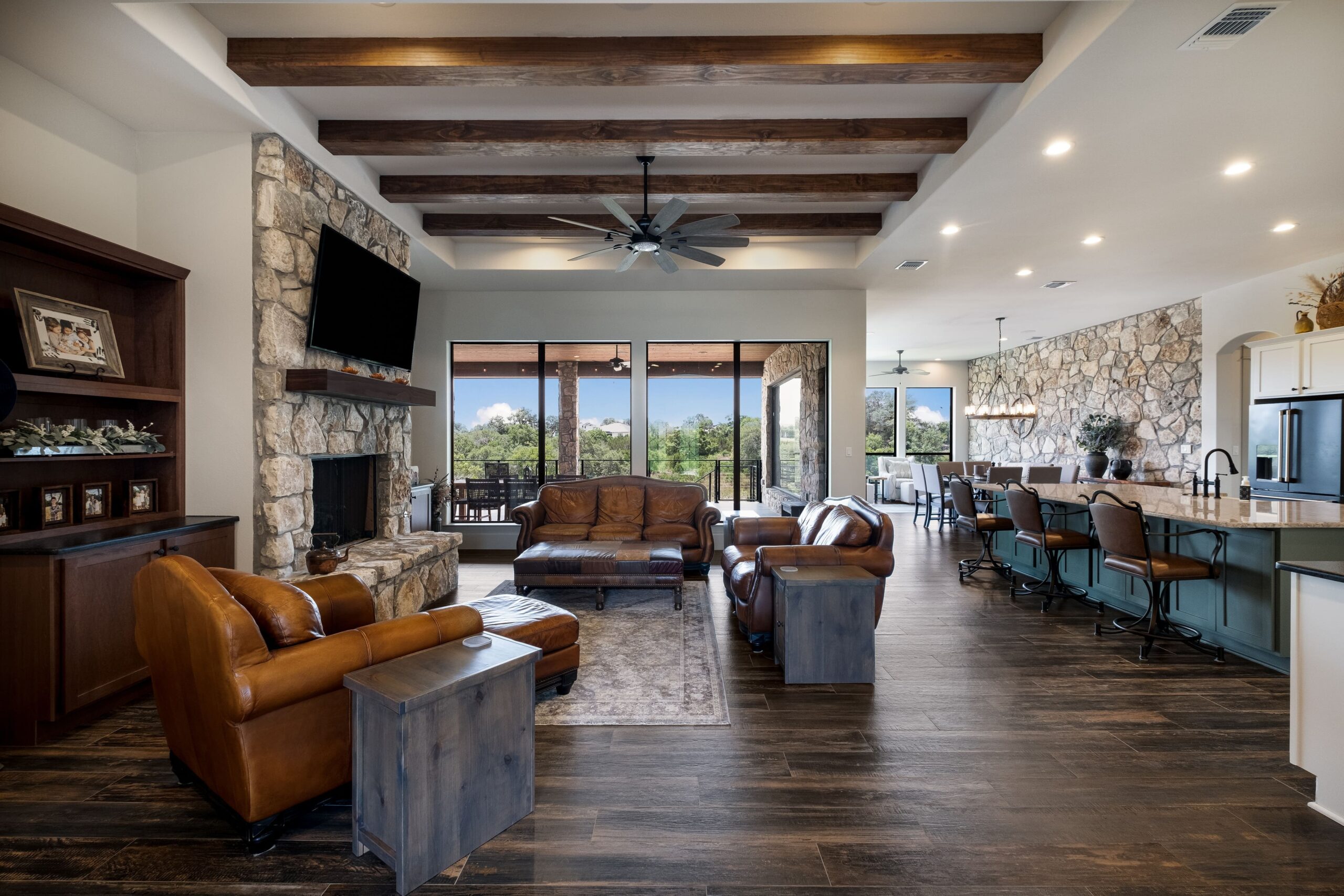
The quality of the finished home does not change. The same stone and stucco exteriors, the same hardwood and tile interiors, the same covered outdoor living spaces, and the same level of personal involvement from Turner and Preston apply whether the lot is in Seguin or in Boerne. The terrain is different. The building experience is the same.
We wanted acreage near the river without paying Hill Country prices. Turner walked the lot with us and pointed out things we would never have noticed — where the water pools after a rain, which direction to face the porch for the afternoon breeze, and how to position the house to keep the pecan canopy intact. The finished home is everything we hoped for.
Your Seguin Home — River Acreage, Built with Hill Country Quality
The Guadalupe River, the pecan orchards, and the open land are waiting. Turner can walk your lot and show you what 55 years of building experience sees in the property — even when the terrain is different from the Hill Country.